Intermittent Fasting: What the Evidence Actually Shows
Published: February 9, 2026
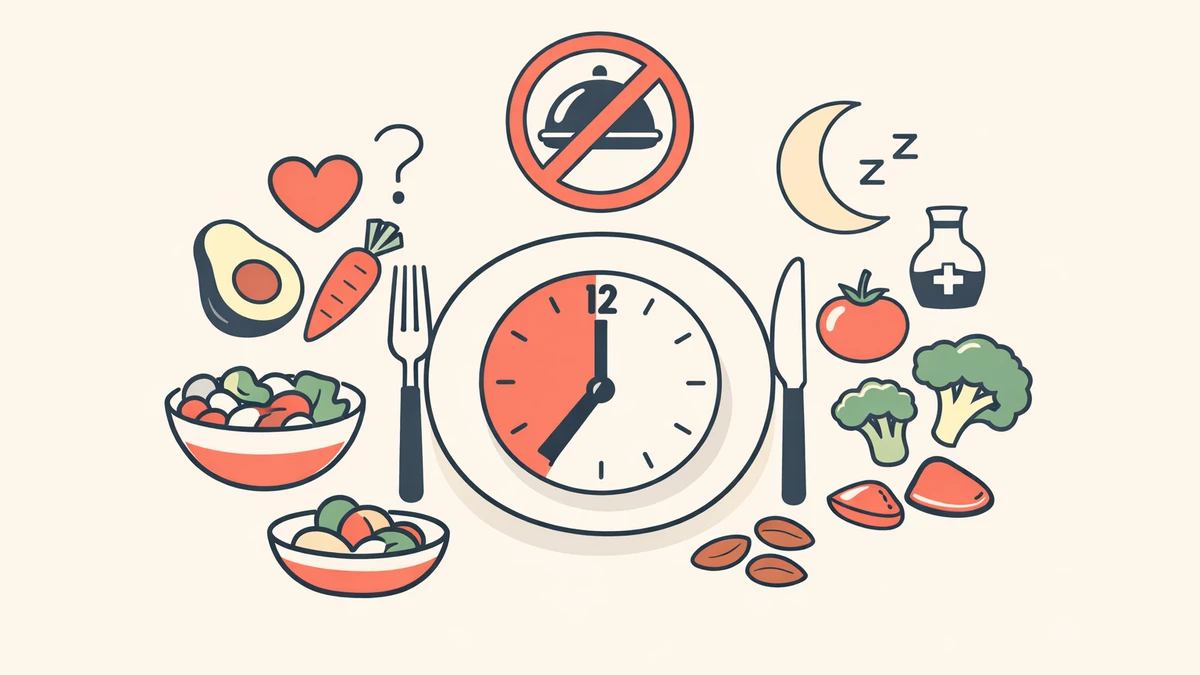
Intermittent fasting has been one of the most talked-about nutrition trends of the past decade. You've probably seen headlines claiming it burns fat faster, reverses ageing or cures everything from brain fog to diabetes. The actual evidence is more nuanced than the headlines suggest. Here's what we know, what we don't, and who it might (or might not) suit.
What Intermittent Fasting Actually Is
It's not a diet in the traditional sense — it doesn't tell you what to eat, only when. The most common approach is 16:8, where you eat within an eight-hour window and fast for sixteen hours. So you might eat between noon and 8pm and skip breakfast. Other methods include 5:2 (eating normally five days a week and restricting calories to 500–600 on two non-consecutive days) and alternate-day fasting. The 16:8 pattern is the one most people find manageable long-term, and it's also the one with the most research behind it.
What the Research Shows
Studies in humans (not just mice, which is important to distinguish) show that intermittent fasting can help with weight loss, but mainly because it reduces overall calorie intake. If you eat the same amount of food in a shorter window, you haven't achieved anything metabolically special. The weight loss benefit comes from the fact that restricting your eating window often means you eat less overall. Some research also suggests modest improvements in insulin sensitivity, cholesterol markers and inflammatory markers, but these benefits aren't dramatically different from what you'd get from any sensible eating pattern that leads to weight loss.
The claim that fasting triggers "autophagy" — a cellular cleanup process — is real in animal models, but the fasting durations required to reliably trigger it in humans are likely longer than 16 hours. Don't fast for 16 hours expecting your cells to regenerate. That's overselling what the current evidence supports.
Who Might Benefit
People who naturally don't enjoy breakfast and end up eating more mindfully when they have a defined eating window often do well with 16:8. It simplifies decision-making: fewer meals to plan, fewer opportunities to snack mindlessly. If you struggle with evening snacking, an earlier eating window (say 8am to 4pm) can cut that off. Some people with type 2 diabetes find that time-restricted eating helps stabilise blood sugar, though this should always be managed with medical supervision.
Who Should Avoid It
Intermittent fasting is not suitable for everyone, and in some cases it can be actively harmful. Pregnant or breastfeeding women should not fast. People with a history of eating disorders should approach it with extreme caution — restrictive eating windows can easily become a socially acceptable form of restriction. Anyone taking diabetes medication that affects blood sugar needs medical guidance before changing meal timing. Teenagers and children should not fast. And if fasting makes you irritable, obsessive about food, or leads to bingeing when you break the fast, that's your body telling you it's not the right approach for you.
The Practical View from Malta
Maltese food culture revolves around shared meals, family lunches and social eating. If intermittent fasting means you skip Sunday lunch with your family or can't eat during a work dinner, the social cost might outweigh any health benefit. Nutrition should work with your life, not against it. If you want to experiment with time-restricted eating, try it for two or three weeks and see how you feel. Track your energy, mood, sleep and hunger — not just weight. If it makes you feel better and fits your routine, keep going. If it makes you miserable or obsessive, stop. There's no prize for suffering.
For a structured, evidence-based approach to figuring out what eating pattern actually works for your body and your life, our dietitian service can help. And if you're curious about the Mediterranean diet as an alternative framework, read our article on the Mediterranean diet and blood sugar management.