How Stress Affects Your Eating Habits (and What to Do About It)
Published: October 27, 2025
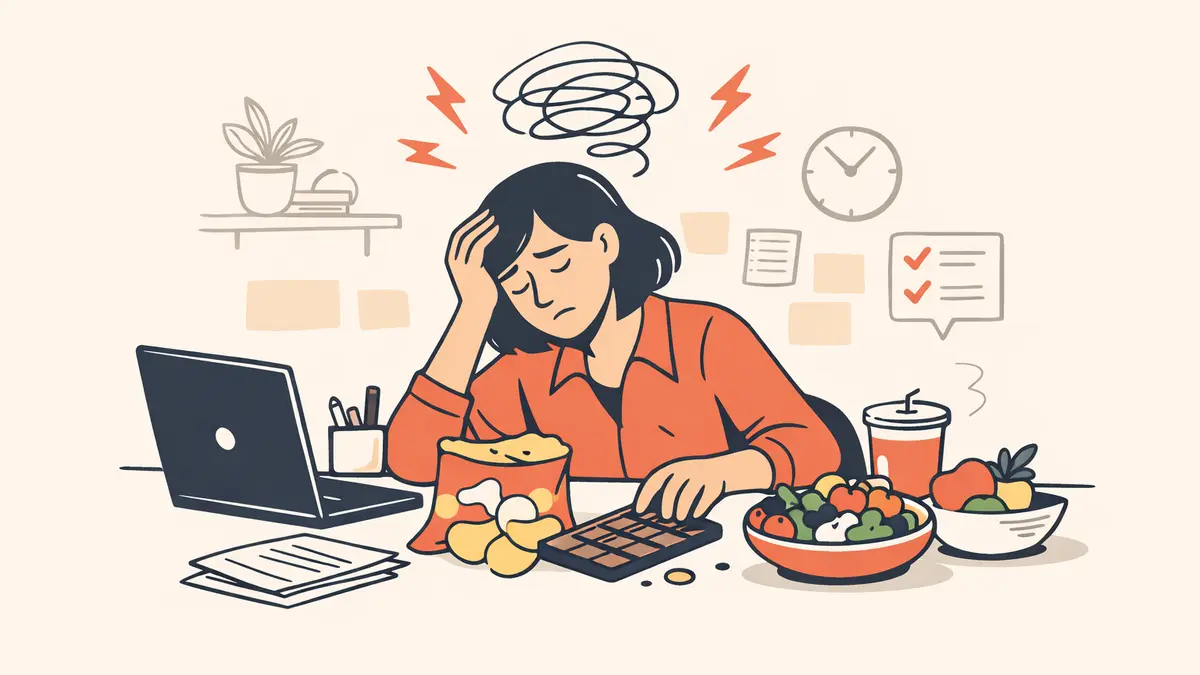
You've had a long day at work. You're tired, frustrated, and before you know it you're standing in front of the fridge eating leftover pasta straight from the container. Sound familiar? You're not weak-willed — your biology is doing exactly what it was designed to do. When you're stressed, your body actively pushes you towards food, particularly the kind that's high in sugar and fat. Understanding why this happens is the first step to managing it.
What Happens in Your Body When You're Stressed
When something stressful happens, your adrenal glands release cortisol. Cortisol does a few things: it raises blood sugar to give you quick energy, it increases appetite (because your body thinks you need fuel to deal with a threat), and it makes you crave energy-dense foods. This was useful when stress meant running from a predator. It's less useful when stress means an inbox full of emails. The problem is that chronic low-grade stress — the kind most of us live with — keeps cortisol elevated for hours or days. That means your appetite stays high even though you're sitting at a desk.
Why You Crave Comfort Foods Specifically
It's not random that you reach for chocolate, crisps or pastizzi rather than a salad. High-sugar, high-fat foods trigger a dopamine release in the brain — the same "reward" chemical involved in other pleasurable experiences. Eating these foods genuinely makes you feel better for a short time. Your brain learns this pattern quickly: stress → eat something comforting → feel a bit better. Over time, this becomes automatic. You don't consciously decide to stress-eat. It just happens because the neural pathway is well-worn.
Emotional Hunger vs Physical Hunger
Learning to tell the difference is one of the most useful skills you can develop. Physical hunger builds gradually, can be satisfied by different foods, and stops when you're full. Emotional hunger comes on suddenly, craves specific comfort foods, and often continues even after you've eaten enough. Physical hunger sits in your stomach. Emotional hunger sits in your head. Next time you feel the urge to eat, pause and ask yourself: am I actually hungry, or am I bored, anxious, lonely or frustrated? Just noticing the difference — without judging yourself — starts to weaken the automatic pattern.
Practical Strategies That Actually Help
The goal isn't to eliminate stress eating entirely. That's unrealistic. The goal is to reduce how often it happens and how much it affects you. Here's what works in practice:
Eat regular meals. Skipping meals when you're busy is one of the biggest triggers. If you go five or six hours without eating, your blood sugar crashes and your willpower disappears. Three balanced meals a day (with a snack if needed) keeps your blood sugar stable and reduces the intensity of cravings.
Keep trigger foods out of arm's reach. You can't eat what's not there. This isn't about banning foods — it's about not keeping them in your desk drawer or kitchen counter where they're the first thing you see when you're stressed.
Build a list of non-food stress relievers. A ten-minute walk, a phone call with a friend, a few minutes of stretching, making a cup of tea, writing in a journal. None of these are as instantly satisfying as eating a biscuit, but they address the underlying stress rather than masking it.
Don't punish yourself afterwards. Guilt after stress-eating often creates more stress, which creates more eating. If it happens, notice it, move on, and eat your next meal normally.
When Stress Eating Becomes a Bigger Problem
Occasional stress eating is normal and human. But if it's happening daily, if you feel out of control during episodes, or if it's causing significant weight gain or emotional distress, it may be worth talking to a professional. A dietitian can help you build a structured eating pattern that reduces vulnerability to binges, while a therapist can work with the emotional triggers. These aren't signs of failure — they're signs that you need a different approach than willpower alone. Our nutrition coaching programme works with both the practical and emotional sides of eating behaviour.